What is a synthetic bone graft?
A synthetic bone graft is a fully artificial biomaterial used to regenerate bone without human or animal tissue.
Introducing Synthetic Bone Grafts - Introducing EthOss
The foundation of a successful dental implant is healthy, ample jawbone. Unfortunately, bone loss is a common issue following tooth extraction, gum disease, or trauma. When the supporting bone gradually shrinks, placing an implant becomes challenging or even impossible in some cases.
This is where bone grafting comes in. It is a necessary procedure to regenerate lost bone, and the materials used for this process are rapidly evolving. The latest innovation? Advanced synthetic bone graft material like EthOss. [i]
If you require bone regeneration for your dental implant procedure, here is why choosing a modern, fully synthetic option is a game-changer for speed, safety, and results.
The Drawbacks of "Natural" Grafts
When you hear a product referred to as "natural" in bone grafting, it typically means it contains bone sourced from another organism.
- Animal Sources: Products often use bone derived from bovine (cow), porcine (pig), or equine (horse) sources.
- Human Sources: Some techniques involve using donated bone from a "bone bank" or even harvesting bone from another site in the patient’s own body (an often uncomfortable secondary procedure).
While these methods have been used for years, they present clear concerns:
- Incomplete Absorption: Many natural-sourced grafts may not be fully absorbed by your body, meaning the foreign bone material remains forever, with your new bone simply growing around it.
- Risk of Infection: Using animal or human donor sources introduces potential, albeit rare, risks of cross-infection.
- Donor Site Pain: Harvesting bone from your own body requires a secondary surgical site, increasing recovery time and discomfort.
Why Choose a Synthetic Bone Graft Material?
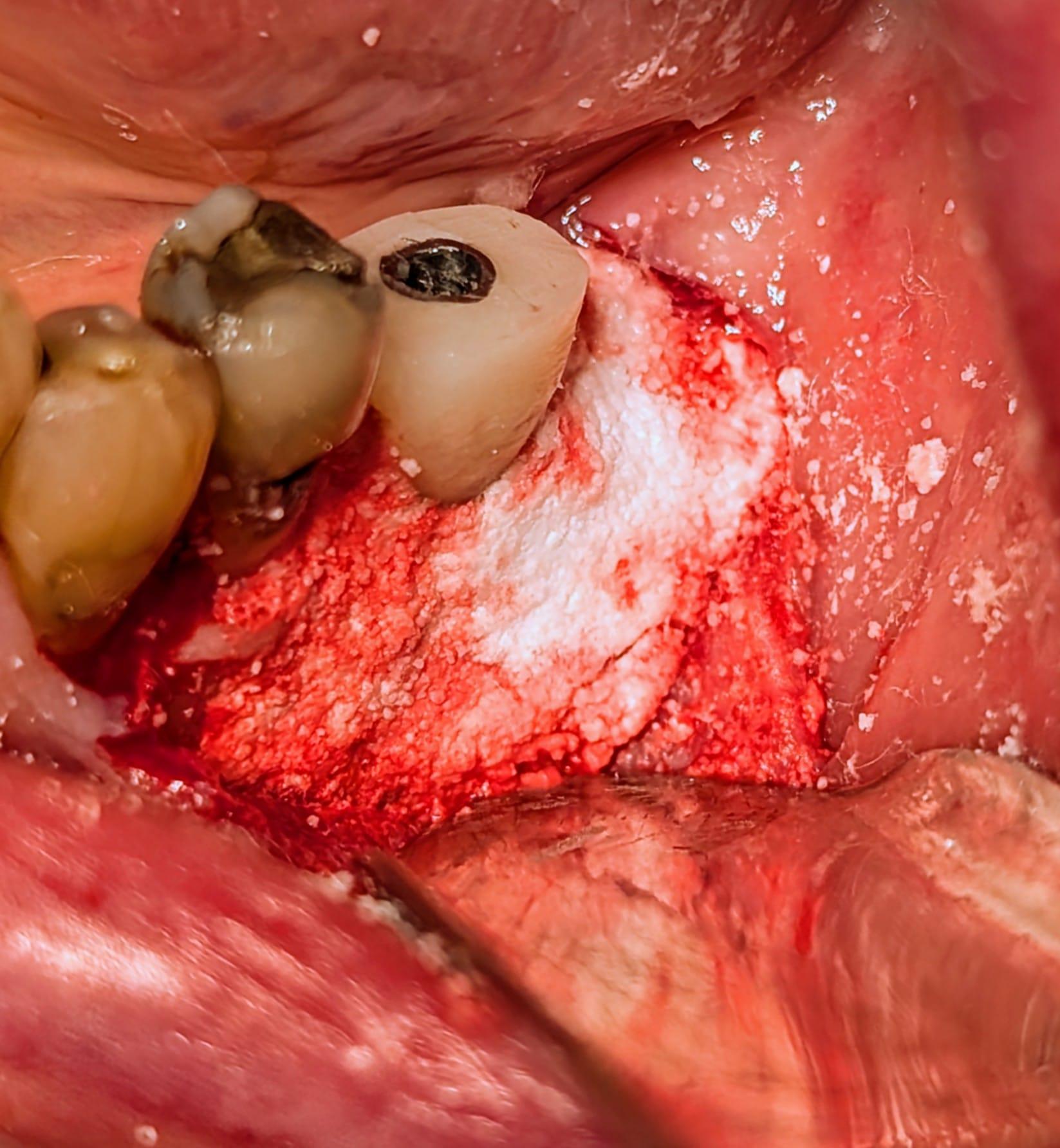
EthOss is at the forefront of bone regeneration technology, completely eliminating the concerns associated with natural grafts. It is a powerful synthetic bone graft material designed to work in harmony with your body’s natural healing process.
1. No Foreign Sources
Fully Synthetic EthOss is made entirely of a combination of Beta-Tricalcium Phosphate (B-TCP) and Calcium Sulphate. This completely synthetic nature means:
- No human bone.
- No animal products.
- No risk of cross-infection.
- No collagen membrane
2. Complete and Total Absorption
Unlike products that may remain in your jaw indefinitely, this is not the case with EthOss as the material is biocompatible and fully resorbs into the patient, to be replaced by your own, native bone tissue. Once the material has stimulated new bone growth, your body naturally dissolves and replaces the graft. Even years later, under a microscope, no remnants would be found, only your new host bone, changing the game on regeneration.
3. Faster Healing and Shorter Treatment Time
The unique formulation of EthOss creates an ideal, calcium- and phosphate-rich environment that encourages rapid bone regrowth. While traditional grafts can require long healing periods, EthOss has been shown to achieve fast healing and regeneration in 12 weeks, significantly shortening your overall treatment duration for implant placement. The study which founded these timelines focused on Bone Regeneration Using an Alloplastic Graft Material. [ii]
4. Built-in Barrier Function
Unlike many traditional grafting techniques that require a separate collagen membrane to protect the graft site, EthOss has this functionality built in. The calcium sulphate component of EthOss naturally hardens to form a protective barrier over the graft, eliminating the need for an additional membrane. This simplifies the procedure, reduces cost, and shortens surgery time while still ensuring predictable, secure healing.
The Future of Implant Dentistry
By choosing to provide an advanced synthetic bone graft material, you are prioritising safety, speed, and a final result where the grafting material is completely replaced by the bodies own natural bone.
For detailed answers to frequently asked questions about bone grafting and our innovative bone grafting material, please visit out social media channels.
For more information on synthetic bone grafting in dentistry, read out other blog Alloplastic Solutions for Dental Bone Grafting
Sources:
[i] https://www.ealingsmiles.co.uk...;
[ii] O’Hooley D., et al., 2024. Bone Regeneration Using an Alloplastic Graft Material that Combines β Tricalcium Phosphate and Calcium Sulphate: A Case Series Report with Histology. Medical Resesarch Archives, [online] 12(8). https://doi.org/10.18103/mra.v...;