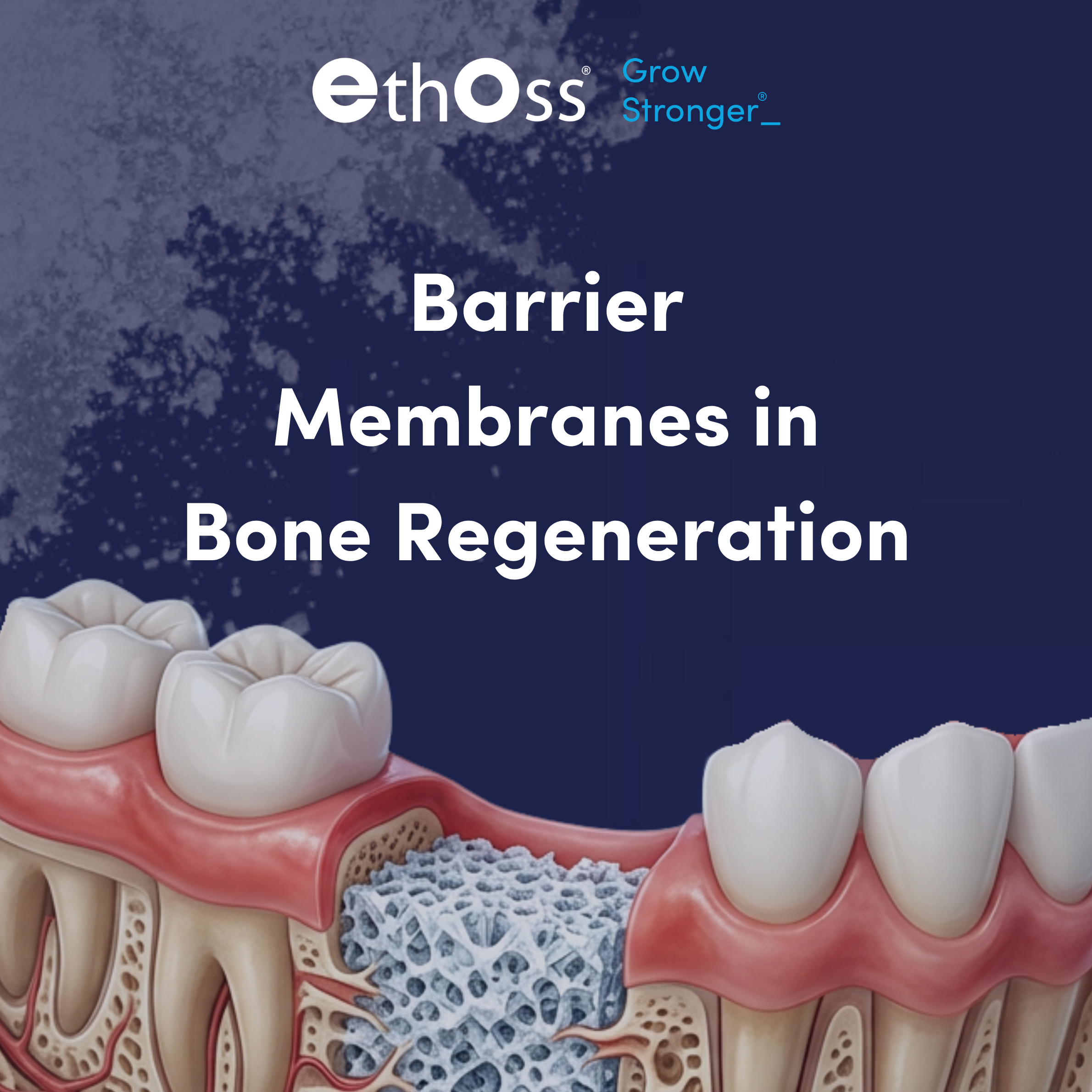
Barrier membranes have long been considered an essential part of guided bone regeneration (GBR). For many clinicians, placing a membrane over a bone graft has become routine, particularly when using xenografts. The traditional rationale is simple: stabilise the graft and prevent soft tissue from entering the defect and allow bone to regenerate undisturbed.
However, modern research into osteoimmunology and the development of advanced synthetic bone graft materials are challenging this long-established approach.
The Traditional Role of Membranes
The concept of barrier membranes emerged from the idea that different tissues heal at different rates. Soft tissue cells migrate quickly, while bone-forming cells take longer to populate a defect. By isolating the grafted area, membranes were thought to create an environment where new bone could develop without interference.
While this principle remains relevant, bone healing is now understood to be far more complex than simply blocking soft tissue ingress.
The Rise of Osteoimmunology
Today's understanding of bone regeneration centres on the interaction between the immune system and the skeletal system.
Dental implants and bone graft materials are recognised by the body as non-self. Rather than being ignored, they trigger a carefully controlled immune response. The success of regeneration depends not on avoiding this response, but on achieving the right type of response.
This has led to growing interest in the role of multinucleated giant cells (MNGCs). Once regarded solely as indicators of inflammation, these cells are now known to play a key role in bone healing and remodelling. Certain types are associated with inflammation, while others actively contribute to new bone formation.
The balance between these responses appears to be critical for successful regeneration.
Why Graft Material Choice Matters
Not all graft materials behave in the same way.
Xenografts are well established and provide a long-term scaffold. However, they are slow to resorb and often remain present many years after placement. This prolonged presence may contribute to an extended immune response, which is one reason membranes are frequently recommended alongside them.
Beta-tricalcium phosphate (β-TCP) behaves differently. Research suggests it encourages a more favourable healing response, promoting graft turnover and replacement with the patient's own bone.
When combined with calcium sulphate, as in modern synthetic grafting materials such as EthOss, the material also creates a temporary stabilising barrier during the early stages of healing. As the calcium sulphate dissolves, vascularisation and bone remodelling can continue naturally.
Is a Membrane Always Necessary?
This is where the discussion becomes particularly interesting.
If a graft material can provide its own initial stability and encourage a pro-healing immune response, the need for a separate membrane becomes less clear.
The periosteum contains cells and biological signals that contribute significantly to bone regeneration. In some situations, covering the site with a barrier membrane may limit those beneficial interactions.
For fully resorbable synthetic grafts based on beta-tricalcium phosphate and calcium sulphate, many clinicians are finding excellent outcomes without the routine use of membranes.
The Future of Bone Regeneration
Membranes still have an important role in guided bone regeneration, particularly when using slow-resorbing materials such as xenografts. However, advances in synthetic bone grafting materials are changing the conversation.
Rather than viewing membranes as mandatory in every case, clinicians are increasingly considering how individual graft materials influence the immune response and bone healing process.
For modern synthetic grafts containing beta-tricalcium phosphate and calcium sulphate, the evidence suggests that predictable bone regeneration can often be achieved without a separate barrier membrane. The focus shifts from simply blocking cells to encouraging the right biological environment for new host bone formation.
Sources:
Our Specialists Talking About Barrier Membranes over on edgex.network
For the exact video, click here to watch Dr Dominic O'Hooley discuss the role of membranes in dental bone grafting.