Harnessing the Immune System with Modern Graft Materials
Advances in implant dentistry are focused on working with the body to regenerate strong, healthy bone more efficiently than ever before. One of the most exciting developments in this space is the growing understanding of osteoimmunology and how carefully designed synthetic graft materials, such as EthOss, can actively support and accelerate healing.
This blog explores how modern biomaterials are transforming bone regeneration, why immune modulation matters, and what this means for clinicians and patients alike.
A Shift in Grafting Philosophy
For decades, clinicians have relied on a range of graft materials, from allografts (human donor bone) to xenografts (animal-derived materials). However, growing clinical experience and patient awareness have driven a shift toward fully synthetic grafts.
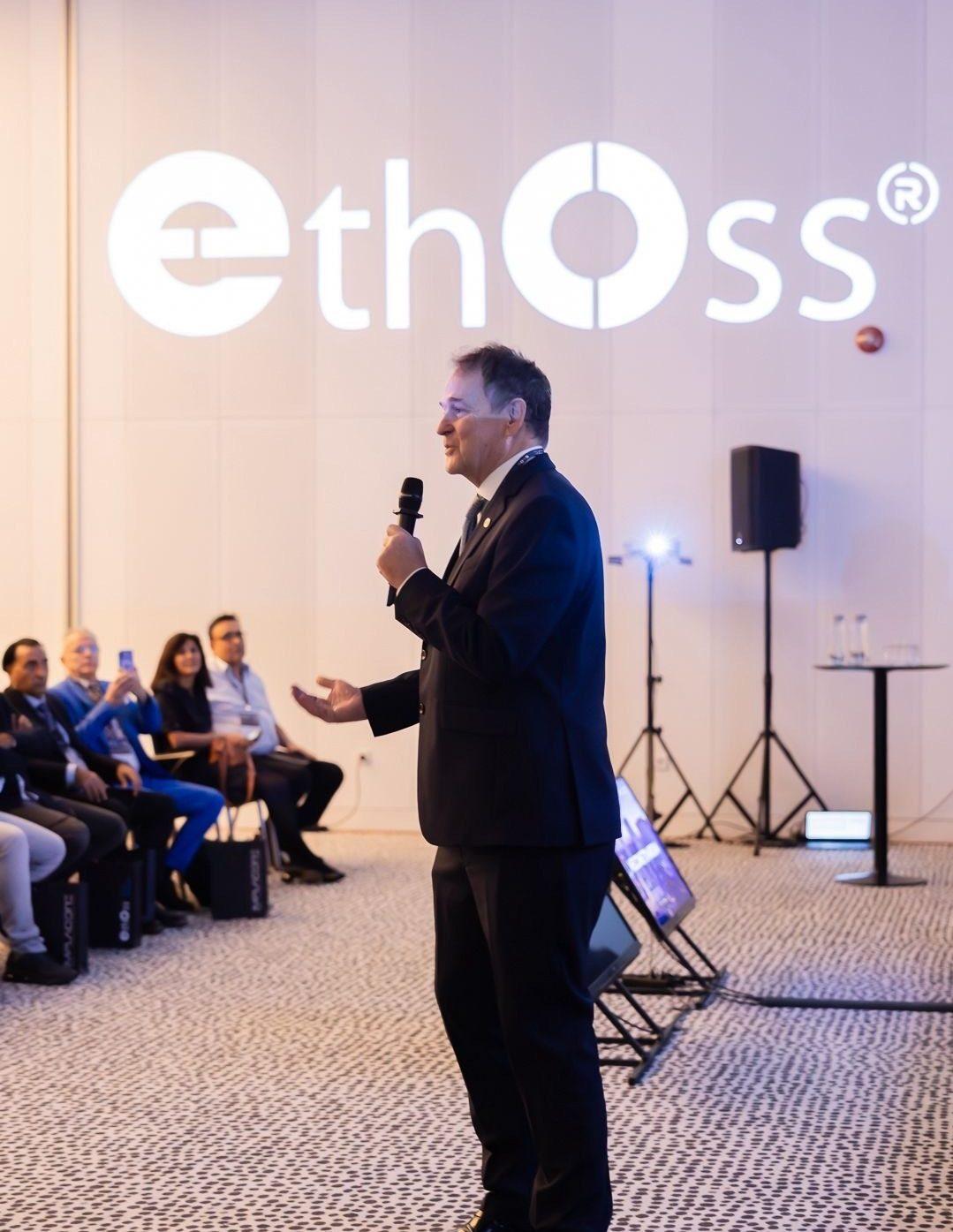
Having placed over 8,000 grafts since the 1990s, including early use of allografts before transitioning to synthetics in the early 2000s, Peter Fairbairn thinks one thing has become clear:
“Patients overwhelmingly prefer synthetic graft materials.” [i]
Many patients feel uncomfortable with donor-derived products, whether from human or animal sources. Often, they don’t voice these concerns but when asked, their preference for synthetic, donor-free options is clear. This aligns with a broader move toward more ethical, biocompatible, and patient-friendly treatment approaches.
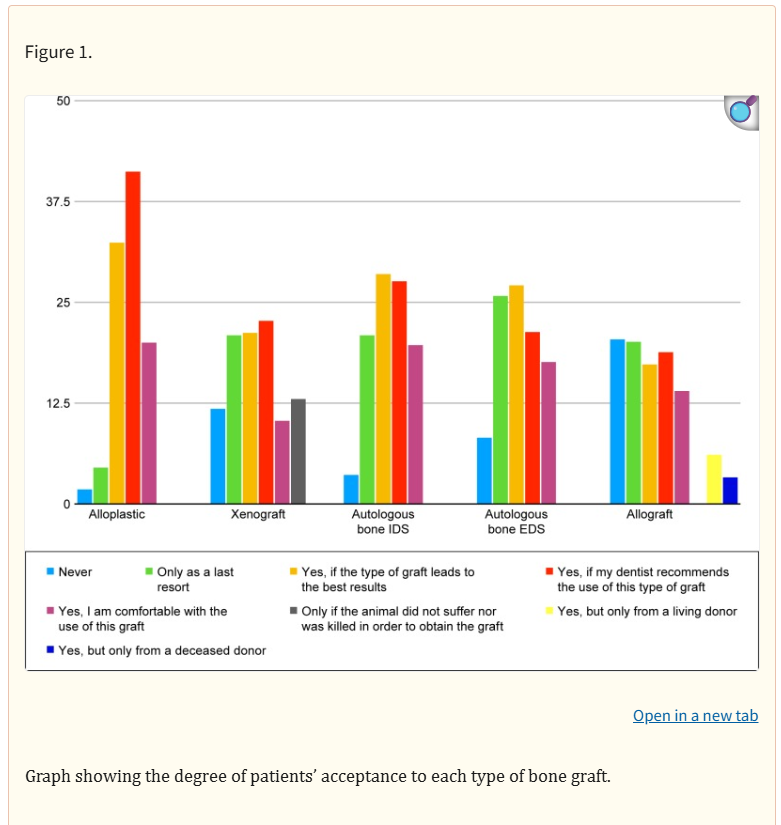
[ii]
While patient preference is important, the results still must deliver predictably.
In many studies looking at histology, and Peter Fairbairn’s own case experience with advanced synthetic grafting, we have seen:
- New bone formation can occur in as little as 10 weeks.
- Implants can be loaded at 12 weeks.
- Long-term results show stable bone at 2, 5, and even 11 years post-op.
In some cases, bone grows completely over the implant during healing (requiring minor re-entry to access it). This demonstrates the material’s ability to stimulate rapid, high-quality regeneration.
Importantly:
- These materials are fully resorbed.
- The result is 100% host bone, not a mixture of bone and residual particles.
To hear more on Peter Fairbairn’s cases, you can sign up to watch his latest webinar here.
Why Osteoimmunology Matters
At the heart of these results lies a deeper biological principle: osteoimmunology. This is the interaction between the immune system and bone regeneration.
When a biomaterial is implanted into a bony defect, the host's initial physiological response is governed not by osteogenic cells, but by innate immune cells, most notably macrophages. These cells possess remarkable functional plasticity, shifting their phenotypes in response to environmental cues from the graft matrix. This process, known as macrophage polarisation, dictates whether a biomaterial triggers chronic foreign body encapsulation or successful osseointegration. [iii]
The orchestration of healing relies on the timely transition between two primary macrophage polarization states:
- M1 State (Pro-inflammatory): This is the initial response. Macrophages in the M1 state clear away damaged tissue and defend against potential foreign invaders. This inflammatory response is necessary to kickstart the process, but it needs to be short-lived.
- M2 State (Pro-regenerative): Once the site is stabilized, macrophages transition into the M2 phenotype. They stop producing inflammatory signals and start releasing growth factors and cytokines that actively recruit bone-forming cells (osteoblasts) and promote blood vessel growth.
- The Synthetic Advantage: With highly biocompatible materials like EthOss, the material design encourages macrophages to rapidly shift from the destructive M1 state to the regenerative M2 state, often within just 1 to 2 weeks. This swift immune resolution is what ultimately accelerates high-quality bone formation.
The Role of Material Design
The success of modern synthetics is driven by material science, particularly:
- Microtopography (surface structure).
- Porosity.
- Composition (e.g., beta-TCP and calcium sulphate).
These factors influence how immune cells behave at the site.
Biocompatible materials promote rapid immune resolution which encourage bone-forming activity, and they also fully resorb and become natural bone. [iv]
Some graft materials, particularly certain animal-derived products, are not fully resorbable. This creates a major limitation as residual particles remain in the bone long-term. These particles occupy space that could otherwise become living bone. As a result, the outcome is less functional with less vital tissue. [iiv]
In contrast, fully resorbable synthetics leave no foreign material behind to maximise the patient’s own regenerative potential.
Clinical Predictability and Safety
A key advantage of fully resorbable synthetic grafts is what happens when things don’t go perfectly.
Even in rare cases of implant failure:
- The graft material has already been resorbed.
- The site is regenerated with healthy host bone.
- There is no long-term contamination with foreign material.
This makes the approach both predictable and forgiving, with minimal long-term risk to the patient.
A New Understanding of Bone Healing
Traditional models focused on osteoblasts, osteoclasts, and osteocytes as the primary drivers of bone regeneration. However, emerging research highlights the critical role of immune cells (especially macrophages) and Cytokine signalling cascades.
In fact, studies show that removing certain immune cells can reduce bone formation dramatically, highlighting how central the immune system is to regeneration. [vi]
We are entering a new era where success is defined not just by placing implants but by how well we support the body’s natural healing processes.
The goal is to modulate the immune response, shifting quickly from inflammation to regeneration, using intelligent biomaterials.
Final Thoughts
The body has always been capable of remarkable healing. The role of modern graft materials is not to replace this ability but to enhance and guide it.
The future of bone grafting is about working smarter with the biology we already have.
Sources:
[i] https://youtu.be/LUxsLkWSGJA
[ii] https://pmc.ncbi.nlm.nih.gov/a...;
[iii] https://www.mdpi.com/2673-4095...;
[iv] https://www.frontiersin.org/jo...;