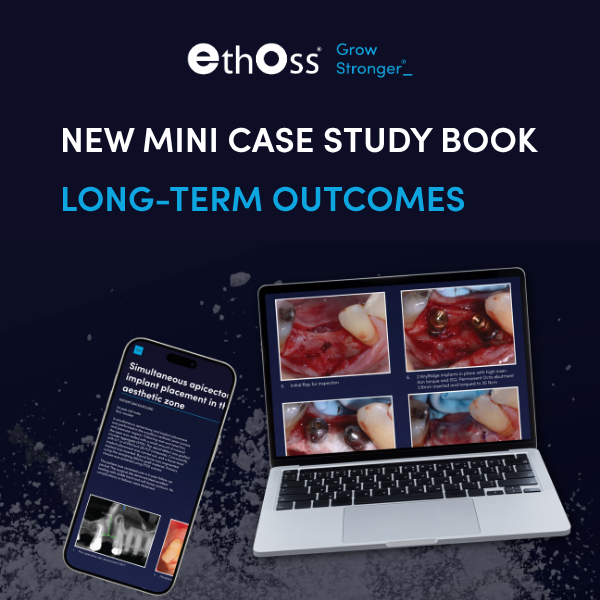
Reviewing long-term clinical cases is one of the most rewarding aspects of regenerative dentistry. While early healing outcomes are important, it is only through long-term follow up that clinicians can truly assess the stability, predictability, and biological success of their treatment decisions.
Our new Long-Term Cases Book brings together five exceptional cases from clinicians around the world, each showcasing the use of EthOss® in situ over extended periods of time, with multiple follow-up assessments demonstrating the durability of treatment outcomes. These cases offer a unique opportunity to observe how regenerated bone continues to respond to functional loading years after treatment.
What makes this collection particularly compelling is not only the longevity of the outcomes, but also the diversity of the clinicians, indications, and surgical approaches represented. Despite differences in techniques and individual treatment philosophies, a common theme emerges throughout every case: when biology is respected, the results are consistent, stable, and enduring.
In regenerative dentistry, the true measure of success extends beyond initial healing and implant placement. Long-term follow-up allows us to observe how tissues respond over time, how regenerated bone adapts to physiological demands, and whether treatment outcomes remain stable years after intervention.
By avoiding the persistence of residual graft particles, clinicians can observe bone that continues to remodel naturally and respond to functional stresses in a way that closely mirrors native tissue.
Cyst Removal, buccal defect and immediate implant placement
Preview of Case #1 in the Case Study Book. From Dr Nicholas Busuttil-Dougall.
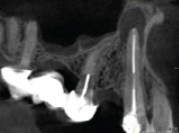
This patient presented with a missing 14 and a failing 13 due to a failed endodontic treatment with a large periapical radiolucency (cyst). The cyst left a large apical defect alongside a huge buccal fenestration defect.
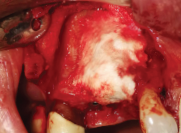
The upper right 3 was removed along with the cyst. The area was carefully cleaned, and osteotomies were carried out using osseo-densification protocol. A wet mix was applied to allow the material to run into the defect completely, and the implants were placed.
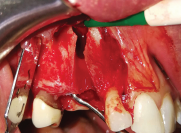
Following this, a drier mix of EthOss® Bone Graft was added buccally and crestally, stabilising the graft. This case demonstrates the use of EthOss Bone Graft alongside immediate cyst management and implant placement.
The following radiographs showcase EthOss immediately post-operative, 4 months post-operative and 5 year follow ups.
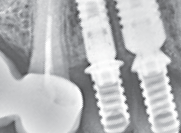
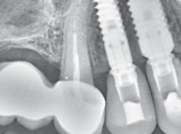
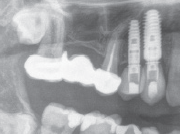
This long-term observation reinforces what many clinicians are experiencing in practice: cases often appear to improve with time, with regenerated sites demonstrating ongoing maturation and adaptation long after the initial procedure.
To see the other 4 cases, you can view the Long-Term Outcomes Case Study Book here.
Five Clinicians, Five Perspectives, One Biological Principle
The five cases featured in this collection span different regions, clinical challenges, and surgical techniques. From ridge regeneration and immediate implant placement to socket grafting and apicetomy, each clinician approaches treatment through their own lens of experience and expertise.
Yet despite these variations, the outcomes share a remarkable consistency.
The book highlights an important principle in modern regenerative dentistry: successful regeneration is not dependent on a single technique. Rather, it depends on creating the optimal biological environment for healing. When clinicians establish the right conditions and work harmoniously with the body's natural regenerative processes, predictable and lasting outcomes become achievable across a variety of clinical situations.
Working With Biology, Not Against It
Our goal is always to improve patient health while minimising surgical burden and long-term complications. As Peter Fairbairn lectures, “we do not create healing, we create the environment in which healing can occur.”.
The cases within this publication demonstrate the power of regenerative protocols that support and direct the body's natural healing capacity.
Acknowledgements
We extend our sincere thanks to the clinicians who contributed these cases and undertook the important work of reviewing their patients' years after treatment. Their willingness to share both their techniques and long-term outcomes has created a resource that will benefit the wider dental community.
As you explore these five cases, we hope you find the same inspiration and professional satisfaction that comes from seeing the outcomes of correct EthOss use.
As Dr. Stuart Kilner, a UK dentist, reflects, "These cases show what's possible when we work with the body, not against it." and perhaps that is the most important lesson this collection has to offer.
You can view the Long-Term Outcomes Case Study Book here.